KPV Peptide in South Africa: The α-MSH Tripeptide Explained
KPV is one of the smallest compounds in our range: just three amino acids long. Despite its size, it has a long research history, because it is the C-terminal end of a much larger and well-studied peptide hormone. This guide to KPV in South Africa covers what the tripeptide is, where it comes from, how laboratories have studied it, and the practical details of the vial and pen formats we stock.
What is KPV?
KPV is the tripeptide Lys-Pro-Val (lysine, proline, valine). It corresponds to the last three residues of alpha-melanocyte-stimulating hormone (α-MSH), and in the literature it is often written as α-MSH(11-13).
The identification details on our live KPV vial page match the public PubChem record for Lys-Pro-Val (CID 125672):
| Property | Value |
|---|---|
| Sequence | Lys-Pro-Val (KPV) |
| Molecular formula | C16H30N4O4 |
| Molecular weight | 342.4 g/mol (PubChem: 342.43) |
| CAS number | 67727-97-3 |
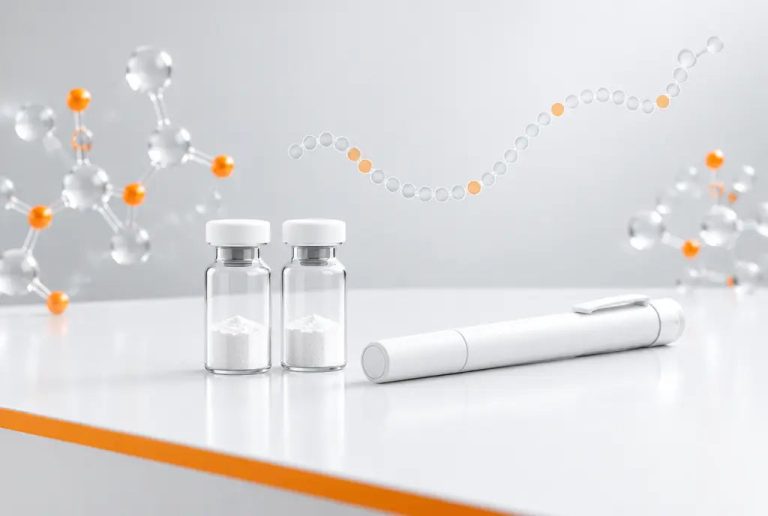
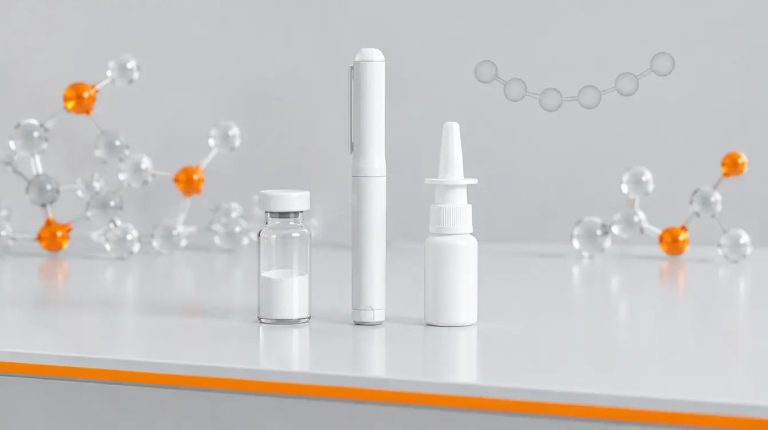
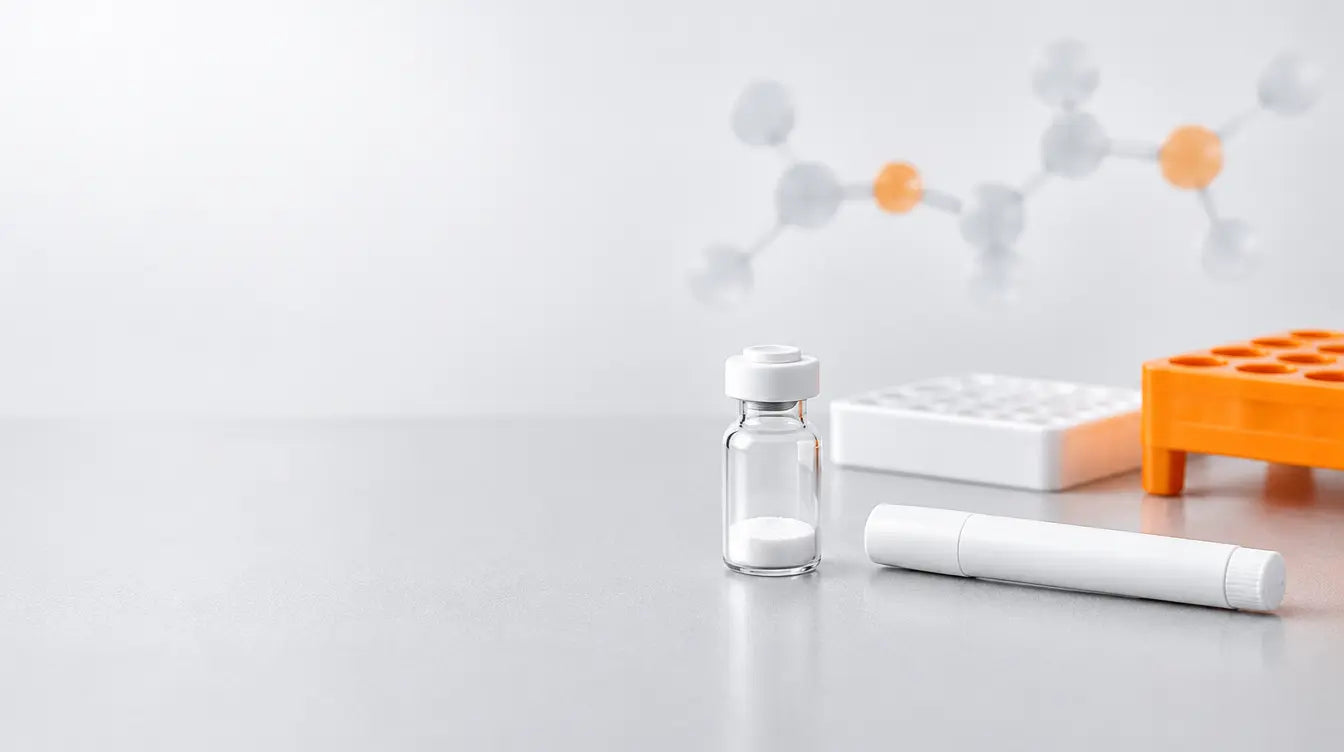
| Formats we stock | 10 mg lyophilised vial; 10 mg pre-filled pen |
With a molecular weight of about 342 g/mol, KPV is a fraction of the size of most compounds researchers work with. For comparison, BPC-157 has a molecular weight of roughly 1,419 g/mol.
Where KPV comes from: α-MSH and POMC
To understand why KPV is studied, it helps to look at its parent molecule. α-MSH is a 13-residue peptide cut from a larger precursor protein called pro-opiomelanocortin (POMC). The UniProt entry for human POMC (P01189) places α-MSH at residues 138 to 150 of the precursor, with the sequence:
S-Y-S-M-E-H-F-R-W-G-K-P-V
The final three letters, K-P-V, are the tripeptide this article is about. POMC is processed into a family of signalling peptides known as melanocortins, and α-MSH acts on melanocortin receptors. Researchers became interested in its short C-terminal fragment because it is far simpler to make and handle than the full 13-residue peptide.
Why study the fragment instead of the full peptide?
A 2008 review in Endocrine Reviews describes α-MSH as having been studied extensively in laboratory and animal models of inflammatory signalling. The authors note that one research limitation of full-length α-MSH is its pigmentary activity, and that KPV has been examined as a fragment that keeps interest in the inflammatory-signalling questions without that pigmentary action. In short, KPV gives researchers a minimal sequence for probing which part of α-MSH is involved in a given effect.
KPV research areas
Published work on KPV falls into a few clear areas. The summaries below describe what was investigated in laboratory settings; they are not claims about any use of our products.
Cell signalling studies
A 2004 study in the Journal of Investigative Dermatology examined how α-MSH, KPV and related peptides signal inside human keratinocyte cell lines. The researchers did not detect a rise in cyclic AMP in response to KPV, but did observe changes in intracellular calcium under specific experimental conditions. They also reported that KPV raised intracellular calcium in hamster ovary cells engineered to express the melanocortin-1 receptor (MC1R). Work like this is part of a wider question in the field: whether KPV acts through melanocortin receptors at all, or by another route.
Transport into cells
A 2008 study in Gastroenterology investigated whether KPV is carried into cells by PepT1, a transporter for di- and tripeptides found in the intestine. Using human intestinal epithelial cell lines and T cells in culture, the authors reported that KPV is taken up via PepT1 and that nanomolar concentrations affected NF-κB and MAP kinase signalling readouts in those cells. They also studied the peptide in mouse models of intestinal inflammation.
Rodent models
A separate 2008 paper in Inflammatory Bowel Diseases studied KPV in two murine models of colitis, including mice with a non-functional MC1R. The authors concluded that the effects they observed appeared to be at least partly independent of MC1R signalling, which links back to the receptor question raised in the cell studies.
Chemistry and stability
Because short peptides can be broken down quickly by enzymes, chemists have also used KPV as a model for structural modification. A 2018 PLoS One paper described a “glycoalkylation” approach to modifying the lysine residue of KPV and reported that the modified peptides showed improved stability against proteolytic enzymes in their assays. This kind of work treats KPV as a simple, well-defined test molecule for peptide chemistry.
All of this is early-stage, preclinical research. It explains why KPV appears in laboratory studies, but it does not establish any effect outside those experimental settings.
KPV formats at Biolabs
We stock KPV in two formats. Prices and details below are taken from the live product pages at the time of writing; always check the page for current pricing and availability.
KPV lyophilised vial (10 mg)
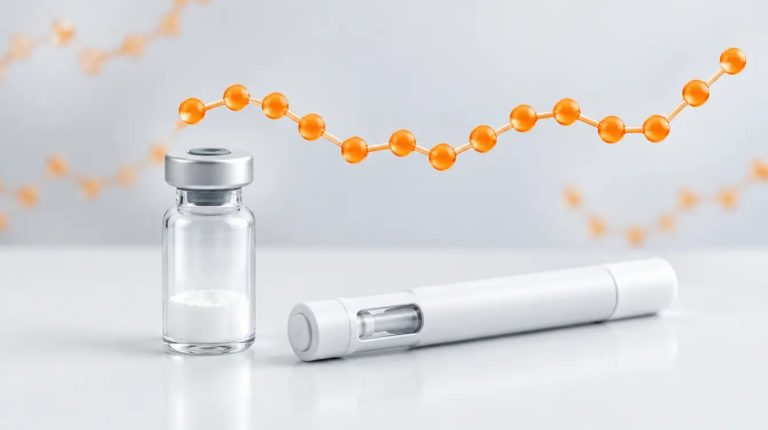
The KPV 10 mg vial is supplied as a lyophilised (freeze-dried) powder in a sealed glass vial, listed at R611. The product page states that each vial includes 10ml BAC water and a recon kit. Storage guidance from the page:
- Store unopened at −20 °C for long-term storage, or 2–8 °C for short-term storage, protected from light and moisture.
- Lyophilised vials are stable at ambient temperature during normal courier transit.
- Allow the vial to reach room temperature before opening to limit moisture uptake.
Vial pages also offer an optional reusable pen and cartridge set for labs that want to load reconstituted material into pen hardware. Browse the full range in our peptide vials collection, and see our lyophilised peptides guide for more on how freeze-dried material behaves.
KPV pre-filled pen (10 mg)
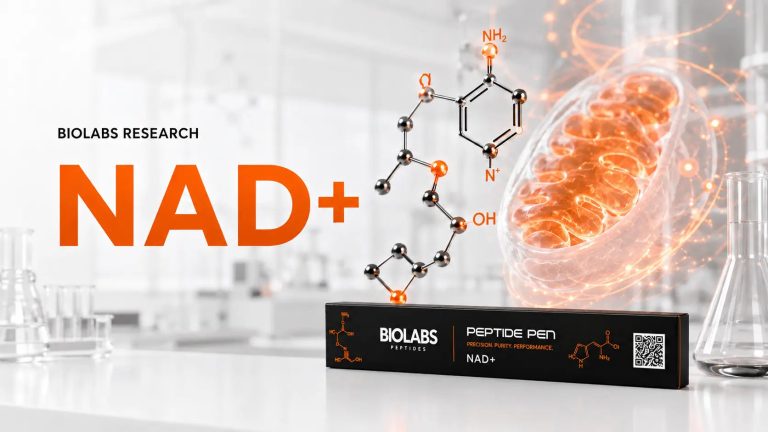
The KPV Peptide Pen is a ready-made solution in a pre-filled pen, made to order, currently listed at a sale price of R1,250 (regular price R1,787). The page states that each pen comes with 20 pen tips and 20 alcohol swabs. Handling notes from the page:
- Keep refrigerated at 2–8 °C and protected from light. Do not freeze.
- Dispatched by overnight cold-chain courier. Where reliable overnight delivery is not available, the lyophilised vial is recommended instead.
- Refer to the pen label for batch details.
Other ready-made options are in our pre-filled peptide pens collection. If you are deciding between the two formats, our pens vs vials guide compares them side by side.
Lab handling tips for KPV
- Record the batch. Note the batch number, the date received and, for vials, the date reconstituted.
- Reconstitute gently. Labs typically add the diluent slowly down the vial wall and swirl rather than shake. If you need extra diluent, Genetek bacteriostatic water (0.9% benzyl alcohol, 10 ml) is stocked separately. Our bacteriostatic water guide explains the options.
- Keep conditions consistent. Use the same storage temperature, containers and diluent across a series of experiments so results stay comparable.
- Check identity data. A small peptide like KPV has a precise expected mass, so mass spectrometry data on a certificate of analysis is a useful identity check. Our COA reading guide explains HPLC purity and mass spec in plain terms, and published certificates are on our COA page.
Supplies for preparing vials, including diluents and pen hardware, are in our reconstitution supplies and hardware collection.
Frequently asked questions
What does KPV stand for?
KPV is the one-letter amino acid code for lysine (K), proline (P) and valine (V). It is the C-terminal tripeptide of α-MSH, also written α-MSH(11-13).
Is KPV the same as α-MSH?
No. α-MSH is a 13-residue peptide; KPV is only its last three residues. Researchers study the fragment separately to understand which part of the parent peptide is involved in a given effect.
Which KPV format should my lab choose?
The lyophilised vial is stable in transit and suits labs that reconstitute their own material. The pre-filled pen is a ready-made solution that ships chilled by overnight courier. If overnight delivery is not reliable in your area, the product pages recommend the vial.
How should a KPV vial be stored?
According to the product page, unopened vials are stored at −20 °C long term or 2–8 °C short term, protected from light and moisture, and brought to room temperature before opening.
Sources
- PubChem. Lys-Pro-Val, CID 125672. pubchem.ncbi.nlm.nih.gov/compound/125672
- UniProt. Pro-opiomelanocortin, human (P01189). uniprot.org/uniprotkb/P01189
- Brzoska T, Luger TA, Maaser C, Abels C, Böhm M. Alpha-melanocyte-stimulating hormone and related tripeptides: biochemistry, antiinflammatory and protective effects in vitro and in vivo, and future perspectives for the treatment of immune-mediated inflammatory diseases. Endocr Rev. 2008;29(5):581-602. PMID 18612139
- Elliott RJ, et al. alpha-Melanocyte-stimulating hormone, MSH 11-13 KPV and adrenocorticotropic hormone signalling in human keratinocyte cells. J Invest Dermatol. 2004;122(4):1010-9. PMID 15102092
- Dalmasso G, et al. PepT1-mediated tripeptide KPV uptake reduces intestinal inflammation. Gastroenterology. 2008;134(1):166-78. PMID 18061177
- Kannengiesser K, et al. Melanocortin-derived tripeptide KPV has anti-inflammatory potential in murine models of inflammatory bowel disease. Inflamm Bowel Dis. 2008;14(3):324-31. PMID 18092346
- Songok AC, et al. Structural modification of the tripeptide KPV by reductive “glycoalkylation” of the lysine residue. PLoS One. 2018;13(6):e0199686. PMID 29953505
itro laboratory research. They are not medicines, are No usage guidance is provided. The purchaser is responsible for safe handling and for complying with applicable South African regulations.