Lyophilised Peptides in South Africa: A Lab Guide to Freeze-Dried Vials
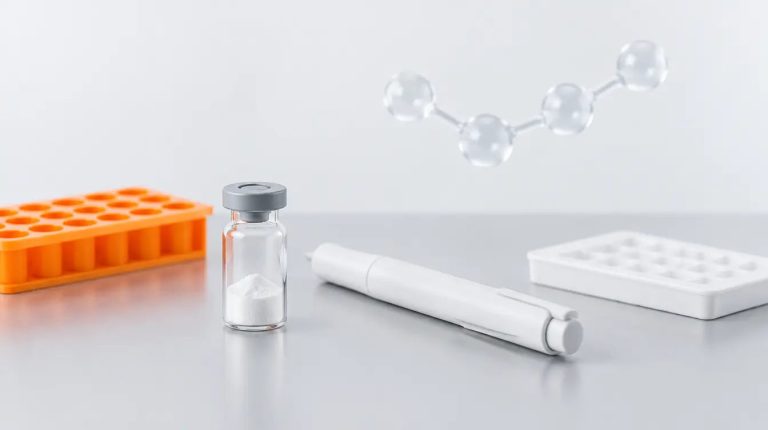
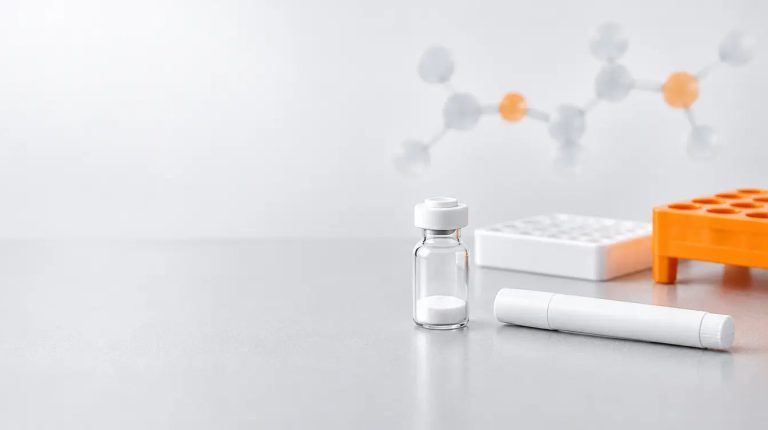
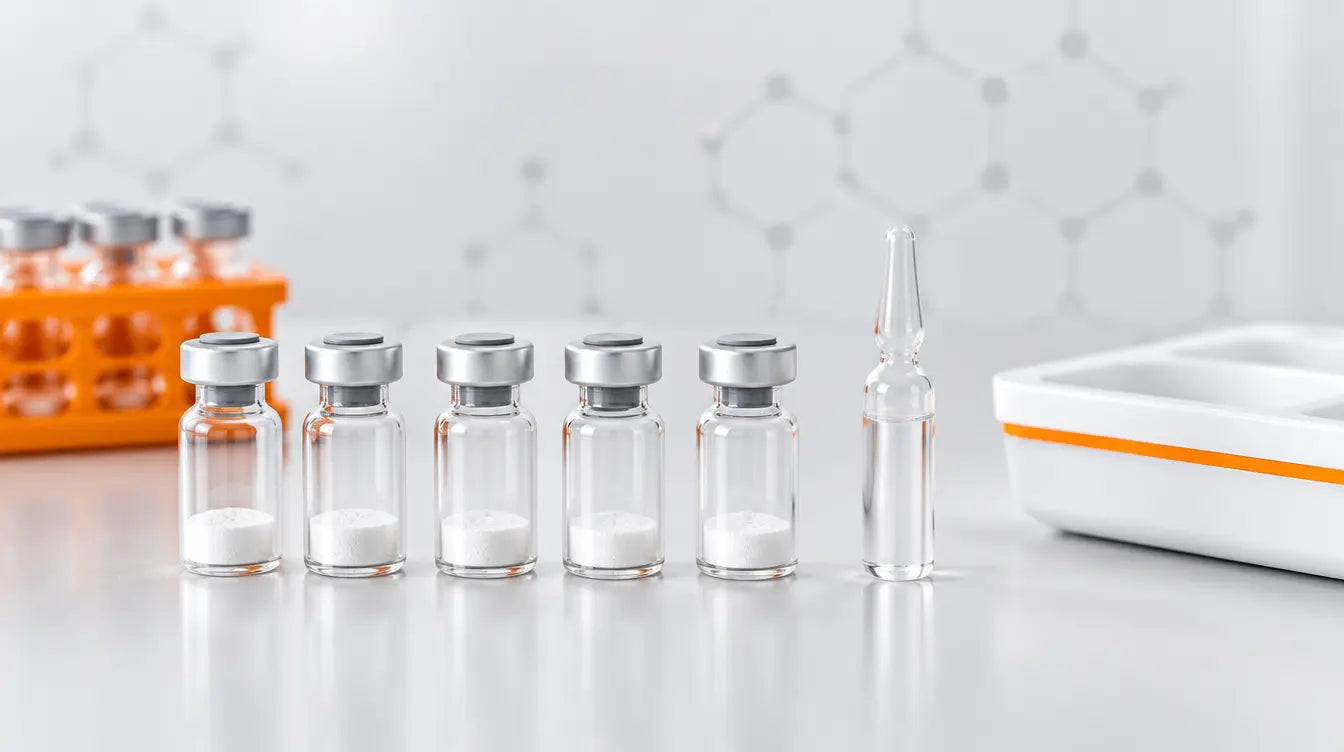
Open almost any research peptide vial and you will not find a liquid. You will find a small, dry, white cake or powder at the bottom of the glass. That is a lyophilised, or freeze-dried, peptide. For labs buying lyophilised peptides in South Africa, understanding what that powder is, why it is made that way and how to look after it is one of the simplest ways to protect the integrity of your research material. This guide explains freeze-drying in plain language, covers peptide powder storage before and after reconstitution, and shows how vials relate to pre-filled pens and reconstitution supplies.
What “lyophilised” actually means
Lyophilisation is the technical name for freeze-drying. A peptide solution is filled into vials, frozen, and then placed under a deep vacuum. Under those conditions the ice turns directly into vapour (sublimation) instead of melting, so water is removed without the material ever sitting in warm liquid. A second, gentler drying stage then removes much of the remaining bound water.
The pharmaceutical literature describes the process in three stages:
- Freezing. The solution is cooled until it is solid. How ice forms at this stage affects the structure of the final cake and how easily water can escape later.
- Primary drying. Under vacuum, ice sublimes away. The product has to stay below a critical temperature, often called the collapse temperature, or the cake can lose its structure.
- Secondary drying. Remaining water that is bound to the solid is removed by desorption, leaving a dry, porous cake with low residual moisture.
A widely cited review of freeze-drying process design sets out these steps and the rules for choosing shelf temperatures and chamber pressures so that each stage runs without overheating the product.
Why research peptides are supplied freeze-dried
Peptides in solution are exposed to water-driven chemical degradation. Reviews of solid-state protein and peptide formulation note that liquid formulations often show instability during handling, and that solid forms, with freeze-drying as one of the key techniques, are frequently used to maintain stability during storage and transport.
For a research lab, that translates into three practical advantages of freeze-dried peptide vials:
- Longer shelf life. A dry powder is generally more stable than the same peptide in solution.
- Easier transport. Biolabs product pages state that lyophilised vials are stable at ambient temperature during normal courier transit, unlike ready-made solutions.
- Flexibility. You choose the diluent and the final concentration that suit your own validated protocol.
What a good lyophilised cake looks like
Freeze-dried peptides usually appear as a white to off-white cake, plug or loose powder. Its shape can vary from vial to vial. A cake that has shrunk away from the glass or broken into powder during transit is not automatically a problem, because the amount of peptide in the vial does not change. Signs that deserve a closer look include visible moisture, a sticky or glassy appearance, discolouration or a damaged seal. If anything looks off, check the batch details against the certificate before use.
Peptide powder storage: before and after reconstitution
Moisture and temperature are the two big variables for a freeze-dried peptide. One published study of a lyophilised protein formulation found that every sample was stable when stored at 5 °C, while higher residual moisture reduced chemical stability, with faster degradation seen at elevated storage temperatures. That is why the storage advice below focuses on cold, dry and dark conditions.
Unopened lyophilised vials
The storage guidance on Biolabs vial product pages, such as BPC-157 and TB-500, is:
- Store unopened vials at −20 °C for long-term storage, or 2–8 °C for short-term storage.
- Protect vials from light and moisture.
- Let the vial reach room temperature before opening, so condensation does not form on the cold powder.
That last point is easy to overlook. Opening a cold vial in a humid room lets moisture condense directly onto the powder, which is exactly what freeze-drying was designed to remove.
After reconstitution
Once water is added, the peptide behaves like a solution again and the stability advantage of the dry form is gone. The product pages advise storing reconstituted solution at 2–8 °C and following your own validated protocol for stability. Good practice includes labelling each vial with the date of reconstitution and the diluent used, and avoiding repeated freeze-thaw cycles.
Reconstitution supplies: matching the diluent to the work
Biolabs product pages note that laboratories typically reconstitute lyophilised vials with sterile water or bacteriostatic solution (0.9% benzyl alcohol), added slowly down the inside wall of the vial and swirled gently rather than shaken. Shaking can create foam and air-liquid interfaces that are generally avoided when handling peptides.
Our reconstitution supplies and hardware collection brings these items together, including the Genetek reconstitution solution (0.9% benzyl alcohol, 10 ml), which is supplied in an individually sealed ampoule and stored at room temperature (15–25 °C) away from direct light. For a deeper comparison of sterile and bacteriostatic water, see our bacteriostatic water guide.
This article does not give volumes or concentrations. Those depend on your protocol, your assay and your lab’s own validated methods.
Vials vs pre-filled pens: where lyophilisation fits
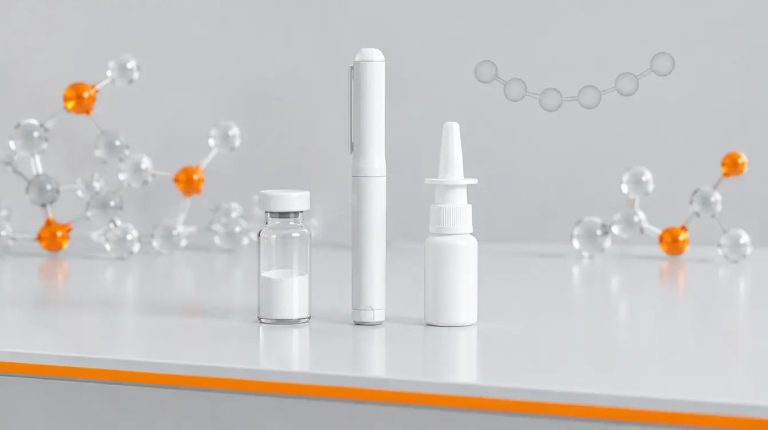
The two main formats on the store sit at opposite ends of the stability spectrum:
- Lyophilised peptide vials hold dry powder. They offer the longest shelf life, are stable at ambient temperature during normal transit, and need reconstitution in the lab.
- Pre-filled peptide pens are supplied as a ready-made solution. Product pages such as the BPC-157 pre-filled pen state that pens are made to order, must be kept refrigerated at 2–8 °C and not frozen, and are dispatched by overnight cold-chain courier.
The pen pages also note that where reliable overnight delivery is not available, the lyophilised vial version is recommended. In other words, if your lab is in an area where courier times are unpredictable, freeze-dried vials are usually the more forgiving choice. Our peptide pens vs vials guide covers the format decision in more detail, and our delivery and cold-chain guide explains what to do when a parcel arrives.
Checking quality: the COA still matters
Freeze-drying protects a peptide, but it cannot fix one that was impure to begin with. Biolabs product pages state that each batch is tested by an independent laboratory for identity and purity (HPLC/MS), and that the batch number on your vial matches its certificate on the COA page. Note that lyophilised powders also contain residual water and counter-ions, which is why HPLC purity and peptide content by weight are not the same number. Our guide to reading a peptide COA explains the difference.
Frequently asked questions
Are lyophilised and freeze-dried peptides the same thing?
Yes. Lyophilisation is the technical term for freeze-drying: water is removed from a frozen peptide solution under vacuum, leaving a dry powder or cake.
Why does the powder in my vial look different from the last one?
Cake shape and texture vary naturally between vials and can change during transit. A loose powder or a cracked cake is common. Visible moisture, discolouration or a broken seal are worth checking against the batch COA.
Do freeze-dried peptide vials need to travel on ice?
Biolabs product pages state that lyophilised vials are stable at ambient temperature during normal courier transit. Once received, store them as advised: −20 °C long-term or 2–8 °C short-term, away from light and moisture.
Should I shake a vial to dissolve the powder?
Product guidance is to add the diluent slowly down the vial wall and swirl gently rather than shake.
Sources
- Tang X, Pikal MJ. Design of freeze-drying processes for pharmaceuticals: practical advice. Pharm Res. 2004. PubMed 15032301
- Angkawinitwong U, et al. Solid-state protein formulations. Ther Deliv. 2015. PubMed 25565441
- Breen ED, et al. Effect of moisture on the stability of a lyophilized humanized monoclonal antibody formulation. Pharm Res. 2001. PubMed 11683251
e only. They are nsumption. This article is for educational purposes and is not medical advice.