Reusable Peptide Pens in South Africa: Cartridges, Tips and Hardware
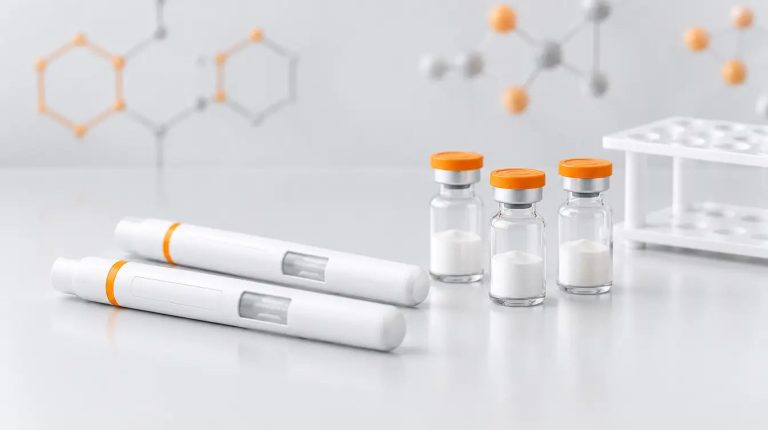
Pre-filled peptide pens are the most popular format in our store, and the next question many labs ask is about the hardware itself. What is the difference between a reusable pen and a disposable pen body? Which cartridges fit? What are pen tips, and how should they be handled? This guide to reusable peptide pens in South Africa walks through each piece of pen hardware we stock, how the parts fit together, and the simple handling habits that keep your equipment clean and your research material consistent.
Pen hardware at a glance
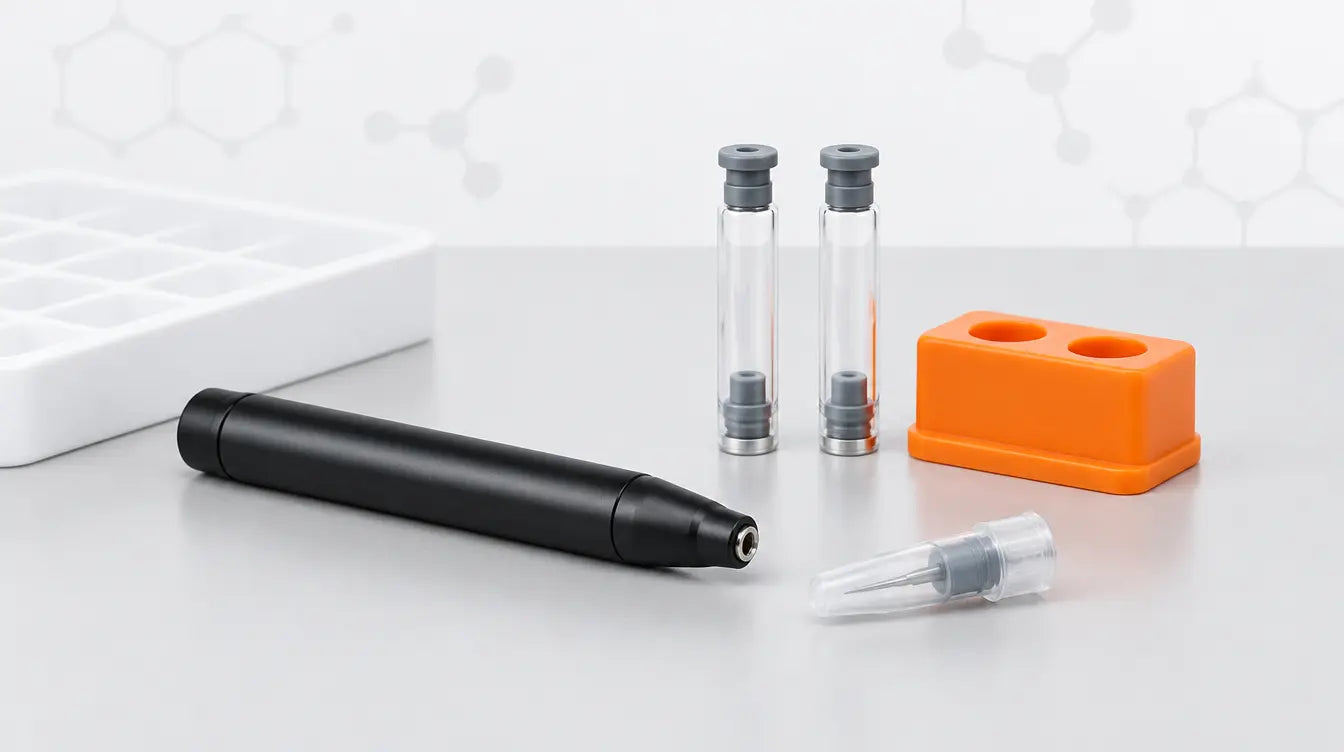
A cartridge pen system has three basic parts:
- The pen body. The housing and dial mechanism that holds a cartridge and moves its plunger forward in measured steps.
- The cartridge. A small glass container with a rubber plunger at one end and a sealed septum at the other. It holds the solution.
- The pen tip. A sterile needle tip that screws onto the front of the pen and pierces the cartridge septum.
Our pre-filled peptide pens arrive as a finished, ready-made solution, so you do not need to assemble anything. The separate hardware in our reconstitution supplies and hardware collection is for labs that work from lyophilised vials and want to load their own reconstituted material into a pen-style system.
Reusable peptide pens
The Biolabs 80IU re-usable pen has a reusable metal body with a matte metallic finish and an 80-unit dial. According to its product page it is compatible with standard 3 ml cartridges and should be stored in a clean, dry place at room temperature. It is listed at R431, and the product page shows a range of colour options; check the page for which colours are currently available.
The main reasons labs choose a reusable body are:
- Durability. A metal body is built to be used with cartridge after cartridge, rather than being thrown away when one runs out.
- Consistency. Using the same pen body across a series of experiments removes one variable from your handling routine.
- Less waste. Only the cartridge and tip are replaced, not the whole housing.
The reusable pen and cartridge set
If you are ordering a vial, you will see an option on vial product pages, such as BPC-157 10 mg, to add a reusable pen and cartridge set. The live page describes it as the Biolabs 80IU re-usable pen with a 3 ml cartridge, ready for your reconstituted vial, at +R499. It is a convenient way to get matching hardware in one step rather than picking parts separately.
Disposable pen bodies
The Disposable Pen is a pen body that accepts standard 3 ml cartridges and pen needle tips, which are sold separately. The product page notes that it includes the pen body only, and it is listed at R205. A disposable body suits labs that prefer to retire the whole unit at the end of a project, or that want a dedicated pen for each compound so there is no question of mixing hardware between materials.
Reusable vs disposable: how to choose
| Consideration | Reusable pen | Disposable pen |
|---|---|---|
| Body | Metal, built for repeated use | Pen body only, retired after use |
| Cartridge | Standard 3 ml | Standard 3 ml |
| Best for | Ongoing work with one routine | One pen per compound or per project |
| Listed price | R431 (or R499 as a set with a cartridge on vial pages) | R205 |
Both options use the same cartridge format, so the choice comes down to how your lab prefers to organise its equipment.
3 ml cartridges
The 3ml Cartridge is a single empty 3 ml cartridge, compatible with the Biolabs disposable pen and the V1/V2 pens. It is sold one per pack at R68 and should be kept in a clean, dry place at room temperature until use.
Cartridges matter more than they first appear. The cartridge is the surface your solution sits against for the life of that fill, and published laboratory work shows that container material can influence how much peptide stays in solution. One study of the decapeptide cetrorelix found that loss of analyte to vial surfaces was the main reason for poor and variable HPLC responses at low concentrations, and that adsorption differed between glass, polypropylene and polyethylene, and even between glass vials from different suppliers. Another study of five model peptides reported that recovery after drying depended on the drying method, the vial material and the additives present. The practical takeaway for any lab is simple: use clean, consistent containers from one source, and do not mix and match hardware mid-series if you want comparable results.
Good cartridge habits
- Label each cartridge with the compound, batch number and date it was filled.
- Use one cartridge per compound. Never refill a cartridge with a different material.
- Store filled cartridges according to the storage instructions for the compound, usually refrigerated at 2–8 °C for reconstituted material, as stated on our vial product pages.
- Inspect the cartridge before each use. Discard it if the solution looks cloudy, discoloured or contains particles.
Pen tips
The 31G 5mm Pen Tips are Fora pen needle tips for standard pen hardware, sold individually at R13 each. They are supplied in sterile packaging, and the product page is clear on handling: store them in a clean, dry place at room temperature in the original sterile packaging, treat each tip as single use only, and dispose of sharps in an approved sharps container.
A fresh tip for each use keeps the cartridge septum clean and avoids carrying anything from one session into the next. Keep a proper sharps container on the bench so used tips go straight into it.
Loading a pen from a vial: the lab workflow
For labs working from freeze-dried material, the usual sequence is:
- Reconstitute the vial. Our vial product pages advise letting the vial reach room temperature before opening; labs typically add bacteriostatic (0.9% benzyl alcohol) solution slowly down the vial wall and swirl gently rather than shake. A solution such as Genetek Reconstitution Solution (0.9% benzyl alcohol, 10 ml) is stocked for this. Our bacteriostatic water guide explains the options.
- Transfer to a clean cartridge. Work on a clean surface, follow your lab’s aseptic technique, and use one cartridge per compound.
- Fit the cartridge into the pen body. Use a reusable or disposable body that accepts standard 3 ml cartridges.
- Attach a new pen tip. Use a fresh sterile tip each time and dispose of it in a sharps container afterwards.
- Label and store. Record the compound, batch and date, and refrigerate as directed.
For more on how freeze-dried material behaves before and after mixing, see our lyophilised peptides guide.
Pre-filled pens or your own hardware?
If you would rather skip reconstitution and loading altogether, a pre-filled pen such as the BPC-157 Peptide Pen is supplied as a ready-made solution, made to order, kept at 2–8 °C and dispatched chilled by overnight cold-chain courier. Where reliable overnight delivery is not available, our product pages recommend choosing the lyophilised vial version instead, and that is where your own pen hardware comes in. Our pens vs vials guide compares the two formats in more detail.
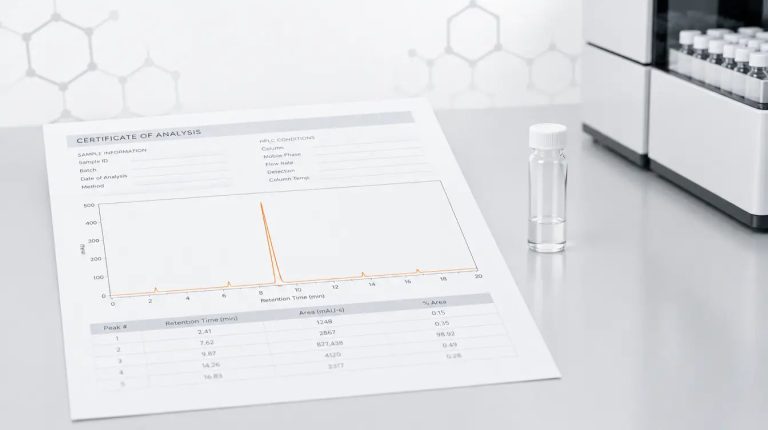
Whichever route you choose, the compound itself is what matters most. Batch certificates of analysis are published on our COA page, so you can check purity and identity before material goes into a cartridge.
Frequently asked questions
Which cartridges fit the Biolabs reusable pen?
The 80IU re-usable pen is compatible with standard 3 ml cartridges. Our 3ml Cartridge is listed as compatible with the Biolabs disposable pen and the V1/V2 pens.
Can pen tips be reused?
No. The product page states the tips are single use only. Use a fresh tip each time and dispose of used tips in an approved sharps container.
Do pre-filled pens need separate hardware?
Pre-filled pens arrive as a ready-made solution. Pen tips are shown as a recommended addition on pre-filled pen pages; separate pen bodies and cartridges are for labs loading their own reconstituted material.
How should pen hardware be stored?
Empty pen bodies, cartridges and tips should be kept in a clean, dry place at room temperature, with tips left in their sterile packaging until use. Filled cartridges follow the storage instructions for the compound.
Sources
- Grohganz H, Rischer M, Brandl M. Adsorption of the decapeptide Cetrorelix depends both on the composition of dissolution medium and the type of solid surface. Eur J Pharm Sci. 2004;21(2-3):191-6. PMID 14757490
- Pezeshki A, et al. Adsorption of peptides at the sample drying step: influence of solvent evaporation technique, vial material and solution additive. J Pharm Biomed Anal. 2009;49(3):607-12. PMID 19150589
d strictly They are not medicines, are No usage guidance is provided. The purchaser is responsible for safe handling and for complying with applicable South African regulations.