GLOW Peptide Blend in South Africa: GHK-Cu, BPC-157 and TB-500 Explained
GLOW is one of the most requested research blends on our site, and it is also one of the most searched-for peptide blends in South Africa. If you have been looking up the GLOW peptide blend in South Africa, this guide explains what is actually in it, how each of its three components is built, which areas the published laboratory literature covers, and how the vial and pre-filled pen formats differ when it comes to storage and delivery.
What is the GLOW peptide blend?
GLOW is a three-peptide research blend that combines GHK-Cu, BPC-157 and TB-500 in a single product. It is supplied for laboratory studies that work with all three compounds, so a lab does not have to source, weigh and combine three separate materials before starting.
The name is simply a product name. It is not a scientific term, and there is no single “GLOW molecule”. Each component keeps its own identity, sequence and molecular weight, and a good certificate of analysis should let you check the blend against those reference values. The component ratio is stated on the batch label of each Biolabs product.
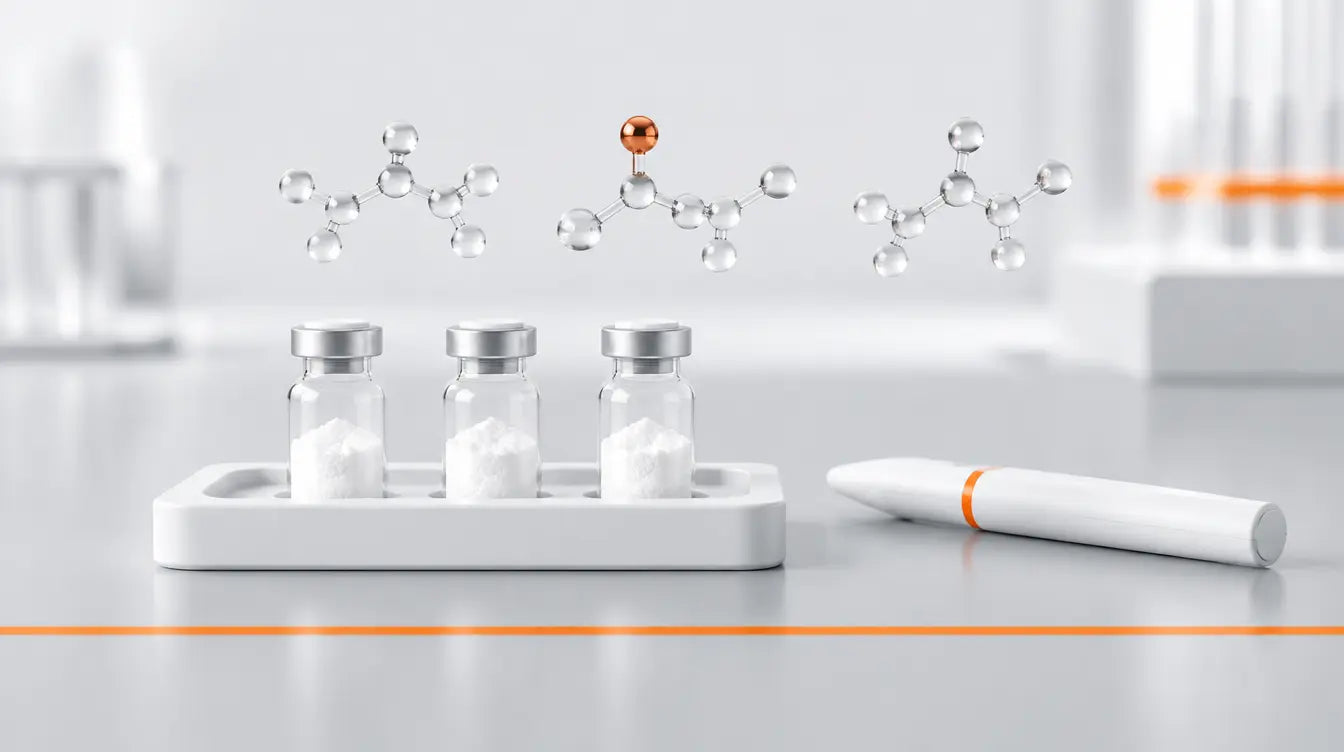
We stock GLOW in two formats:
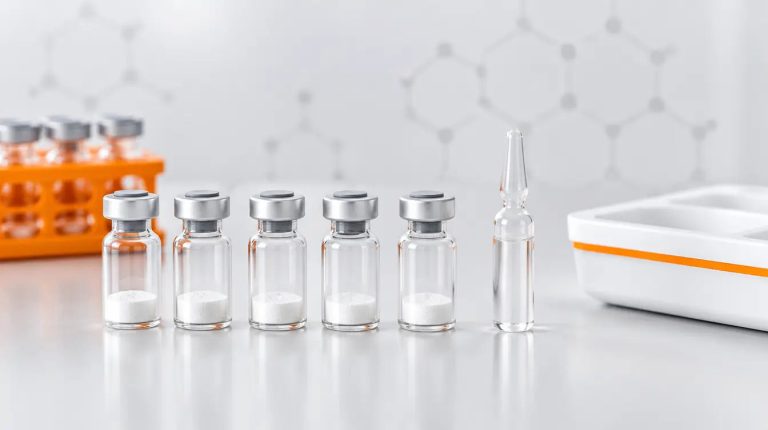
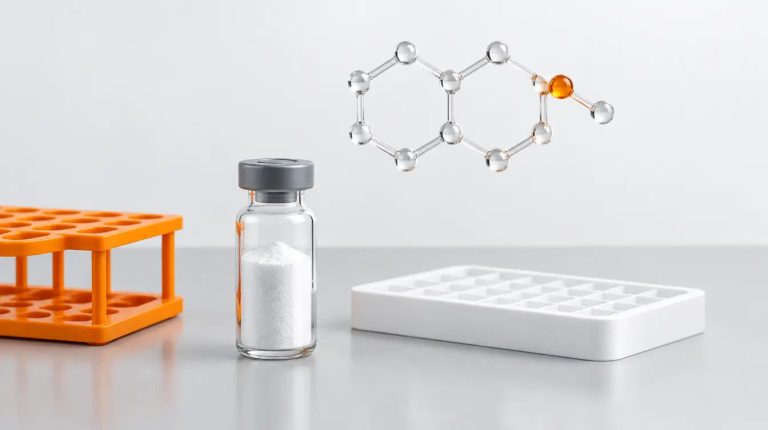
- GLOW lyophilised vial, 100 mg total peptide content, supplied as a freeze-dried powder in a sealed glass vial.
- GLOW Peptide Pen, 70 mg total peptide content, supplied as a ready-made solution in a pre-filled pen and made to order.
The three components: structure and identifiers
Because GLOW is a blend, the most useful thing a researcher can do is know the reference data for each part. These are the identifiers listed on our product pages.
GHK-Cu (copper tripeptide)
GHK-Cu is the tripeptide glycyl-L-histidyl-L-lysine bound to a copper(II) ion. It is the smallest of the three components and the one that gives the blend its copper character.
- Molecular formula: C14H22CuN6O4
- Molecular weight: about 401.9 g/mol
- CAS number: 89030-95-5
BPC-157 (pentadecapeptide)
BPC-157 is a synthetic chain of 15 amino acids (Gly-Glu-Pro-Pro-Pro-Gly-Lys-Pro-Ala-Asp-Asp-Ala-Gly-Leu-Val), derived from a fragment of a larger protein first identified in gastric juice. We cover it in depth in our BPC-157 South Africa guide.
- Molecular formula: C62H98N16O22
- Molecular weight: about 1419.5 g/mol (matching the PubChem record, CID 9941957)
- CAS number: 137525-51-0
TB-500 (thymosin beta-4 related peptide)
TB-500 is the name used for a synthetic peptide related to thymosin beta-4, a naturally occurring actin-binding protein. A 2012 drug-testing paper characterised an N-terminal acetylated 17–23 fragment of thymosin beta-4 in a product sold as TB-500, which is one reason careful identity testing matters for this component. Our TB-500 South Africa guide goes into the sequence detail.
- CAS number: 885340-08-9
What has each component been studied for?
The published literature examines GHK-Cu, BPC-157 and TB-500 mainly as individual compounds, and almost all of it is preclinical, meaning cell culture or animal-model work. The papers we cite below look at single components, not at the GLOW blend itself, so treat them as background on each part rather than as data about the combination.
- GHK-Cu has been studied in laboratory models for its effects on gene expression and on pathways linked to the extracellular matrix, such as collagen-related signalling. A 2018 review by Pickart and Margolina discusses this work in the light of newer gene expression data.
- BPC-157 has been examined in rodent and in-vitro models involving angiogenesis, VEGF receptor signalling and the nitric oxide system. A 2026 review in Pharmaceutics focuses on the formulation and stability challenges researchers face when working with it.
- Thymosin beta-4 and TB-500 are studied for actin sequestration and cell migration in laboratory models, and analytical chemists have published methods for detecting TB-500 and its metabolites.
None of this is evidence of any effect in people, and nothing here should be read as a claim of benefit. Biolabs supplies GLOW strictly as a research material.
Vial or pen: choosing a GLOW format
The choice between formats is mostly about how your lab works and how quickly you plan to use the material. Our pens vs vials guide covers the general trade-offs; here is how they apply to GLOW.
The lyophilised vial
The vial holds 100 mg of total peptide as a freeze-dried powder. Lyophilised material is the more stable option for storage and for longer delivery routes.
- Store unopened at −20 °C long term, or 2–8 °C short term, protected from light and moisture.
- Lyophilised vials are stable at ambient temperature during normal courier transit.
- Let the vial reach room temperature before opening to limit moisture uptake.
Reconstitution is done in the lab with a suitable diluent such as Genetek 0.9% benzyl alcohol reconstitution solution. You will find diluents, cartridges and other hardware in our reconstitution supplies collection, and our lyophilised peptides guide explains how freeze-dried vials should be handled.
The pre-filled pen
The pen holds 70 mg of total peptide as a ready-made solution, so there is no reconstitution step. Because it is a solution, it needs more care in storage and transport.
- Made to order and supplied as a ready-made solution.
- Keep refrigerated at 2–8 °C and protected from light. Do not freeze.
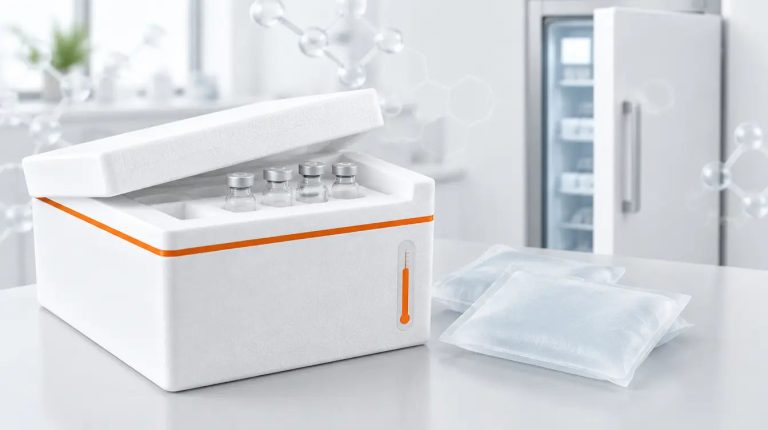
- Dispatched by overnight cold-chain courier. Where reliable overnight delivery is not available, we recommend the vial version instead.
Browse all formats in our pre-filled peptide pens and peptide vials collections.
Delivery in South Africa
Fridge-line items such as the GLOW Peptide Pen ship cold-chain with RAM Fridgeline, which keeps the pen in the 2–8 °C range on its way to you. Lyophilised vials, including the GLOW vial, ship with The Courier Guy, and you can choose between service levels at checkout. When your parcel arrives, move pens straight into a fridge and vials into the freezer or fridge as above. Our delivery and cold chain guide covers what to do on arrival.
Checking a GLOW batch: the COA
A blend needs more checking than a single peptide, because you are confirming three identities rather than one. When you open a GLOW certificate of analysis, look for:
- An HPLC trace that shows separate, identifiable peaks for the components rather than one unexplained peak.
- Mass spectrometry results that line up with the reference molecular weights above.
- A batch or lot number that matches the label on your vial or pen.
The current GLOW certificate is listed on our COA page, and our guide to reading a peptide COA explains HPLC purity and mass spec in plain language.
GLOW vs KLOW
You may also see KLOW on our site. KLOW is a related research blend that adds a fourth peptide, KPV, to the same GHK-Cu, BPC-157 and TB-500 base. If your study design does not include KPV, GLOW is the simpler three-component option. Our KPV guide explains that tripeptide on its own.
Frequently asked questions
What is in the GLOW peptide blend?
GLOW contains three peptides: GHK-Cu, BPC-157 and TB-500. The component ratio is printed on each batch label.
How much peptide is in each GLOW product?
The lyophilised vial contains 100 mg of total peptide, and the pre-filled pen contains 70 mg of total peptide in solution.
How should GLOW be stored?
Store unopened vials at −20 °C long term or 2–8 °C short term. Keep pens refrigerated at 2–8 °C, away from light, and never freeze them.
Can I buy the components separately?
Yes. We also stock BPC-157 and TB-500 as individual lyophilised vials for studies that need single compounds.
Is there a COA for GLOW?
Yes. The GLOW certificate of analysis is available on our COA page.
Sources
- Pickart L, Margolina A. Regenerative and Protective Actions of the GHK-Cu Peptide in the Light of the New Gene Data. Int J Mol Sci. 2018. PubMed 29986520
- Mateescu DM, et al. BPC-157 as an Investigational Peptide Therapeutic: Biopharmaceutical Challenges, Formulation Strategies, and Translational Development Barriers. Pharmaceutics. 2026. PubMed 42198317
- Goldstein AL, et al. Thymosin beta4: actin-sequestering protein moonlights to repair injured tissues. Trends Mol Med. 2005. PubMed 16099219
- Esposito S, et al. Synthesis and characterization of the N-terminal acetylated 17-23 fragment of thymosin beta 4 identified in TB-500, a product suspected to possess doping potential. Drug Test Anal. 2012. PubMed 22962027
- Rahaman KA, et al. Simultaneous quantification of TB-500 and its metabolites in in-vitro experiments and rats by UHPLC-Q-Exactive orbitrap MS/MS. J Chromatogr B. 2024. PubMed 38382158
- PubChem. BPC-157, CID 9941957. PubChem record
All Biolabs Peptides products, including GLOW, are sold strictly for laboratory research. They are This article describes compound identity, published research areas and product handling only, and is not a claim of benefit. Purchasers must be 18 or older and are responsible for handling products in line with applicable South African laws.