TB-500 in South Africa: Sequence, Research Areas and Lab Handling
TB-500 is one of the most searched-for research peptides in South Africa, usually mentioned alongside BPC-157. Online, it is surrounded by a lot of hype and very little plain information. This guide covers what TB-500 actually is, how it relates to the natural protein thymosin beta-4, what the published laboratory literature looks at, which formats are available locally, and what a lab should check before buying it.
Browse TB-500 alongside every other vial, pen and blend we stock in our peptides South Africa collection.
What is TB-500?
TB-500 is a short synthetic peptide. Its sequence is Ac-Leu-Lys-Lys-Thr-Glu-Thr-Gln, usually written as Ac-LKKTETQ. That is seven amino acids, with an acetyl group capping the first residue (the N-terminus).
The sequence matches residues 17 to 23 of thymosin beta-4 (Tβ4), a 43-amino-acid protein found in many cell types. This stretch of Tβ4 is known as its main actin-binding region. TB-500 is therefore best described as a small, defined fragment analogue of a much larger protein, not as a copy of the whole protein.
Key identifiers
These are the reference values to compare against a supplier’s listing and certificate of analysis:
- Sequence: Ac-Leu-Lys-Lys-Thr-Glu-Thr-Gln (Ac-LKKTETQ)
- Molecular formula: C38H68N10O14
- Molecular weight: about 889.0 g/mol
- CAS number: 885340-08-9
- Appearance: white lyophilised powder (vial format)
TB-500 vs thymosin beta-4: why the difference matters
You will often see “TB-500” and “thymosin beta-4” used as if they were the same thing. They are not. Full-length Tβ4 has 43 amino acids and a molecular weight of roughly 4.9 kDa. TB-500 is a 7-residue fragment of about 0.9 kDa. When you read the literature, check which molecule a study actually used. Much of the published work was done on the full protein, and results for one cannot simply be applied to the other.
The N-terminal acetyl group matters too. Analytical chemists have noted that this cap helps tell the synthetic fragment apart from naturally occurring, non-acetylated breakdown products of Tβ4.
What has TB-500 been studied for?
Research involving TB-500 and its parent protein is overwhelmingly preclinical, which means it was done in cell cultures, enzyme systems or animal models. With that in mind, the main areas in the literature are these.
Actin biology and cell migration
Thymosin beta-4 is described as the major actin-sequestering molecule in eukaryotic cells. It binds monomeric (G-) actin and helps regulate how actin filaments form. A widely cited review by Goldstein, Hannappel and Kleinman (Trends in Molecular Medicine, 2005) summarises this biochemistry and the tissue models in which Tβ4 has been studied. The actin-binding region that TB-500 corresponds to is the reason the fragment is used in actin and cell-migration research.
Analytical chemistry and anti-doping science
Much of the work on TB-500 itself comes from analytical laboratories. A doping-control group at Ghent University identified Ac-LKKTETQ as the peptide in products sold as TB-500. They synthesised it and proposed an LC-MS method for detecting it in plasma and urine (Esposito et al., Drug Testing and Analysis, 2012).
Metabolism studies
A 2024 study from the Korea Institute of Science and Technology developed a UHPLC-MS/MS method to measure TB-500 and its metabolites in in-vitro systems and in rats (Rahaman et al., Journal of Chromatography B, 2024). The authors reported Ac-LK as the main early metabolite in rats and Ac-LKK as a longer-lasting one. They also screened the metabolites alongside the parent peptide in fibroblast cell assays. They note that the biological effects of TB-500 itself had not been well documented. Work like this is a good reminder that much is still unknown about this compound.
All of the areas above are research context only. None of them is a claim that TB-500 has any benefit or use outside the laboratory.
TB-500 formats available in South Africa
Biolabs stocks TB-500 in three formats, so labs can match the product to their workflow:
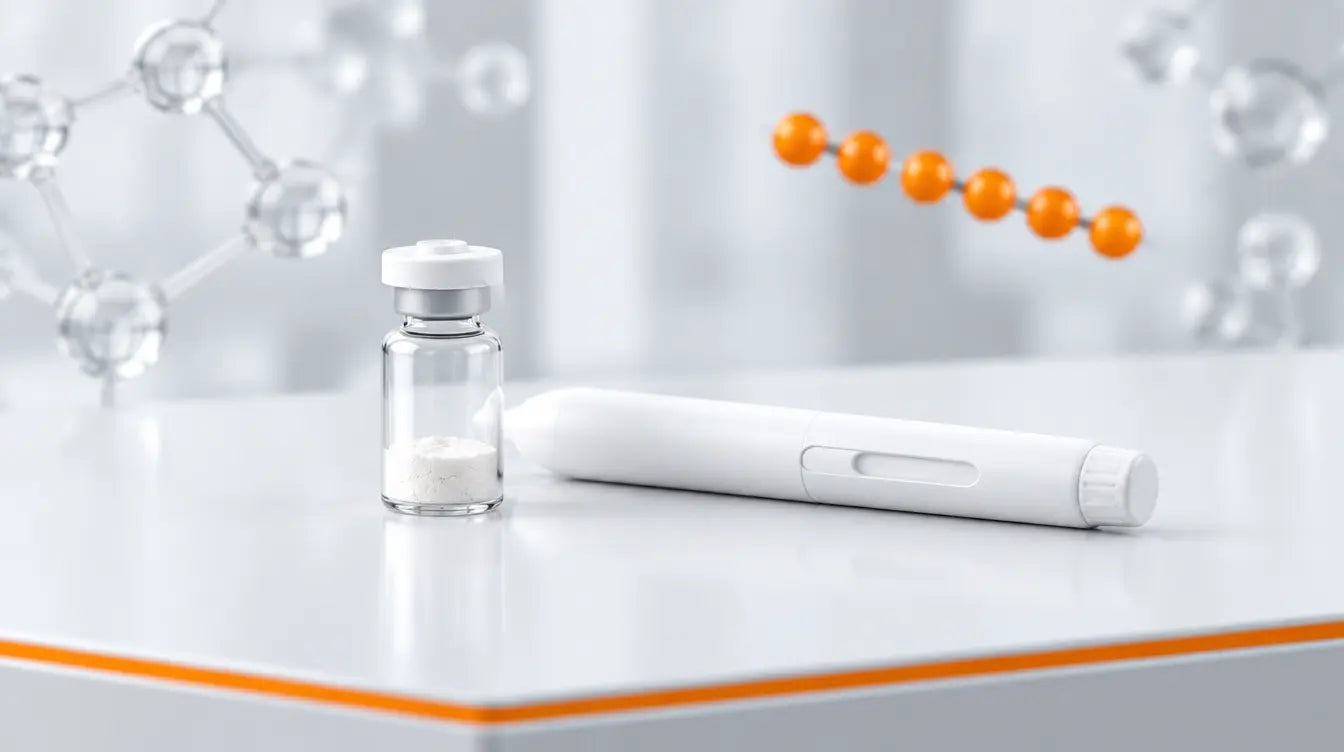
- TB-500 lyophilised vial (10 mg): freeze-dried powder with the longest shelf life. It needs to be reconstituted before use.
- TB-500 Peptide Pen (10 mg): a ready-made solution in a pre-filled pen. Each pen is made to order and sent by overnight cold-chain courier.
- BPC-157 + TB-500 Wolverine Stack: both reference peptides in one vial (10 mg or 20 mg total), for protocols that call for both. A Wolverine pen version is also available.
If you are unsure which format suits your lab, our pens vs vials guide covers the trade-offs. For more on the other half of the Wolverine blend, see our BPC-157 explainer. You can browse every format in the peptide vials and pre-filled peptide pens collections.
Storage and lab handling
Like most short peptides, TB-500 is most stable as a dry powder. Common laboratory practice is:
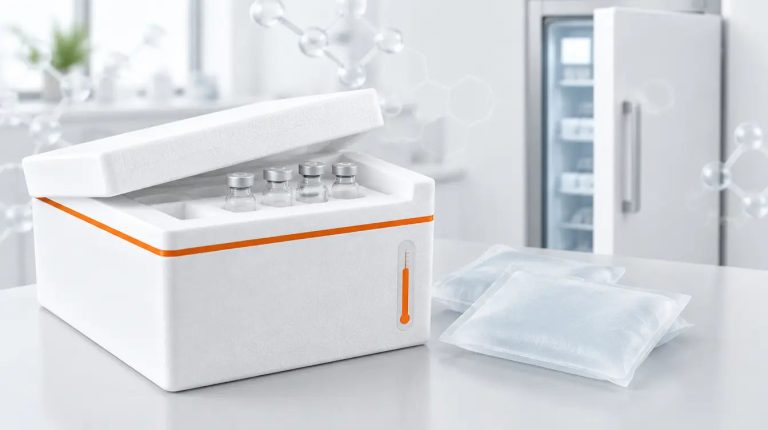
- Lyophilised vials: store unopened at −20 °C long-term or 2 to 8 °C short-term, protected from light and moisture. Let the vial reach room temperature before opening it, so that condensation does not form on the powder.
- Reconstitution: labs typically use sterile water or bacteriostatic water, added slowly down the side of the vial and swirled gently, not shaken. Our bacteriostatic water guide explains the options, and solvents and accessories are in the reconstitution supplies range.
- Solutions and pens: keep at 2 to 8 °C, away from light, and do not freeze. Follow your own validated protocol for how long a solution remains usable.
Checking TB-500 quality before you buy
Because TB-500 is a popular name, products sold under it are not always what they claim to be. A few checks help.
Match the sequence and mass
The listing should state the sequence (Ac-LKKTETQ), formula and molecular weight. On the certificate, a mass spectrometry result should land close to the expected mass of about 889 g/mol. A result near 4.9 kDa would point to full-length thymosin beta-4, which is a different material.
Look for HPLC purity and a batch-matched COA
An HPLC trace should show one dominant peak, and the batch number on the certificate should match the batch number on your vial or pen. Every Biolabs batch is tested by an independent laboratory, and the certificates are published on our COA page.
Prefer local stock
Ordering from local stock avoids long international transit times and customs delays, which matters most for solution formats. Biolabs ships nationwide by tracked courier, with free shipping on South African orders over R2,500, and you can pay in 4 interest-free payments with Payflex.
TB-500 FAQ
Is TB-500 the same as thymosin beta-4?
No. TB-500 is the acetylated 17–23 fragment (Ac-LKKTETQ) of thymosin beta-4, a 7-amino-acid peptide. Thymosin beta-4 itself is a 43-amino-acid protein.
Where can I get TB-500 in South Africa?
Biolabs Peptides ships TB-500 nationwide from local stock, as a lyophilised vial, a pre-filled pen and in the BPC-157 + TB-500 Wolverine blend.
Is TB-500 for human use?
How should TB-500 be stored?
Store lyophilised powder at −20 °C long-term or 2 to 8 °C short-term. Keep reconstituted solution and pre-filled pens at 2 to 8 °C, away from light.
How do I verify my batch?
Find the batch number on your product and match it to the corresponding certificate on our COA page.